







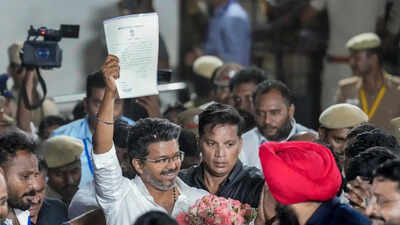
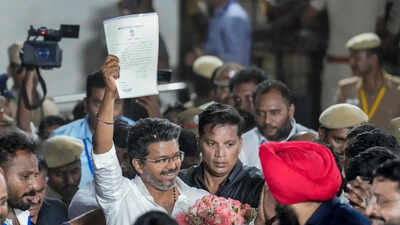
CHENNAI: While other politicians were busy building a vote bank, Vijay ran his campaign almost like a film release, with trailers, guest appearances and marketing gimmicks, an approach digital marketing strategists say helped him win.“He is a star. He knows if he can get women and children in, he is guaranteed a hit. And that’s what he did,” says Jai Pratap Sisodia, a Delhi-based election management consultant, who worked with parties in Tamil Nadu for the 2026 election. Women made up more than 80% of additional voters in the election.Vijay turned his network of 85,000 fan clubs into “virtual warriors” and micro influencers. He used holograms, robots and AI content, virtual rallies, hyper-local digital messaging, his target was first-time voters — reel them in, reel the whole family in.“It worked because people trust content more when it comes from friends, family and communities rather than direct brand messaging. In a way, the audience becomes the medium,” says Madurai-based digital marketing specialist Hariharan Gandhi.“Conversations spread without him having to rely on paid promotions. He used social media threads, WhatsApp groups, local conversations. It’s what marketers call organic amplification. Instead of pushing content to people, the campaign allows people to pull the conversation forward themselves,” says Hariharan.In the final leg of his campaign, Vijay called for a ‘youth tsunami’, goading children to help their ‘Vijay mama’ win by pressuring parents. Almost instantly, the line spawned a million reels of children hitting and threatening parents. “I will fling cow dung on you if you don’t vote for whistle,” said one reel, “I will poison your rice if you don’t vote for Vijay”, shouted a girl at her father.“Vijay never talked policy,” says Hariharan. In fact, most people still can’t put a finger on his ideology. “He figured out from the get-go that in a fastscrolling digital environment, people, especially youth, don’t stop for logic, they stop for emotion,” he says. And for lines like, ‘You listen to me this one time, I will listen to you for the next five years’, which stole the show a few days before TN went to vote, spinning off viral videos of children begging voters to give Vijay a chance.“Campaign teams usually target a limited number of influential handles, say 100 at a time, from rival camps to counter narratives online. In TVK’s case, the absence of a structured network made it difficult for DMK-linked accounts to respond,” says R Deepak, who worked with the IT cell of national parties.DMK’s campaign teams first encountered this during the Karur stampede. While DMK blamed Vijay for the incident, TVK-linked accounts circulated videos and local reactions supporting Vijay and questioning police arrangements at the venue. TVK’s official IT wing largely restricted itself to sharing Vijay’s speeches. “Much of the online mobilisation was driven by supporter accounts and independent digital networks, including IDs funded by Voice of Commons (VoC),” said Deepak.“Vijay has been saying that he is a target of coordinated attacks by rival parties. We were given the task of amplifying it,” says an employee of VoC, which is run by Villivakkam MLA Aadhav Arjuna.Political observers and party insiders say sections of DMK’s online ecosystem failed to engage with critics and undecided voters. Instead, many dissenting voices were labelled “tharkuris” by party supporters on social media.