







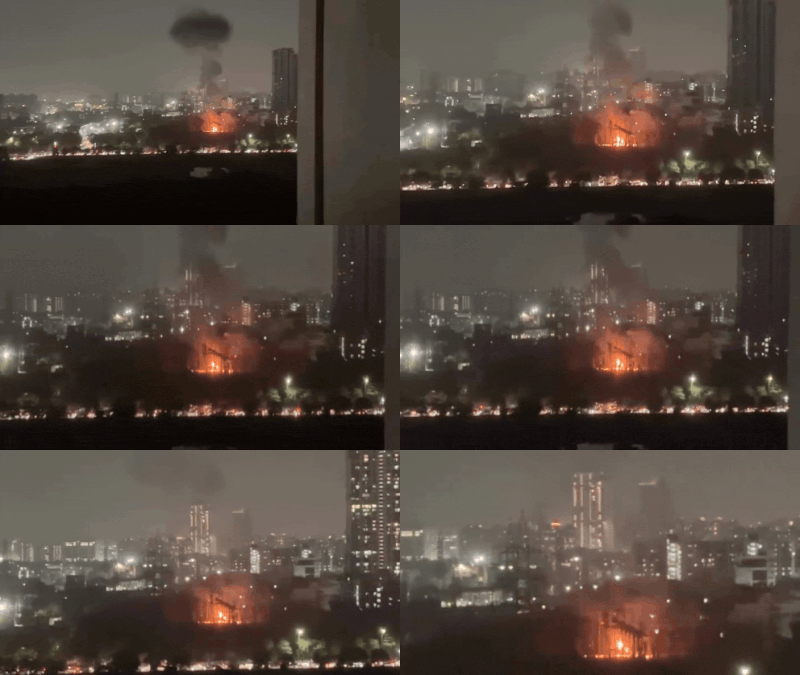
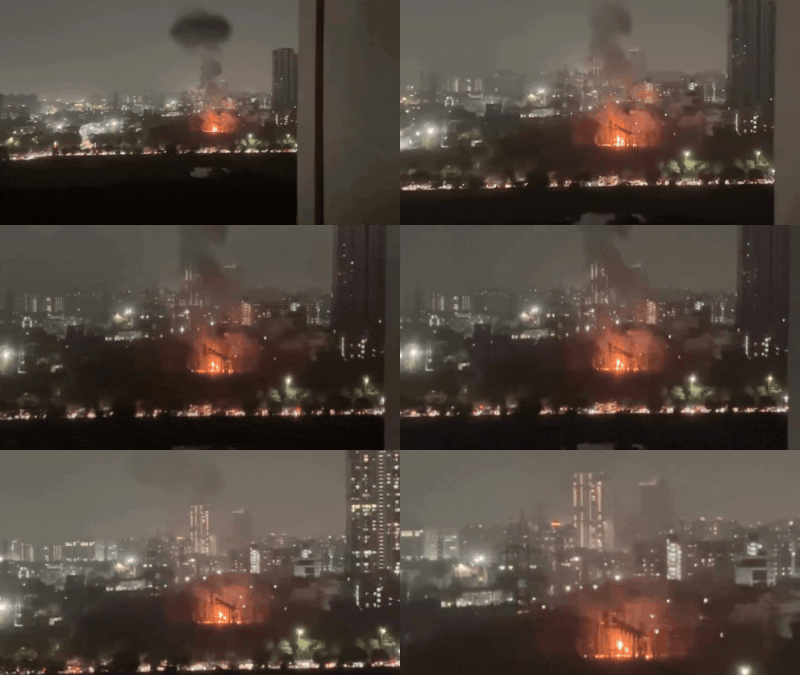
GURGAON: A transformer blast at a 220kV substation in Sector 72 plunged large parts of Gurgaon into darkness on Friday evening, exposing the mounting pressure on NCR’s power infrastructure as extreme heat and record electricity demand pushed systems to the brink.The outage, triggered by a technical fault that led to an oil leak and explosion in the current transfer circuit, disrupted supply across at least eight substations, stalled Rapid Metro services and left thousands of residents battling sweltering conditions with no fans, ACs or lifts. Officials said the fault occurred around 7.50pm, at a time when Gurgaon was already reeling under intense heat, with temperatures touching 42.7°C.According to Dakshin Haryana Bijli Vitran Nigam (DHBVN), the city had just recorded its highest-ever electricity demand a day earlier at 2,372 MW, surpassing previous peaks of 2,332 MW in 2024 and 2,032 MW in 2025. Electricity consumption on Thursday alone touched 1.92 crore units. Demand had remained above 2,200 MW for much of the past week as temperatures consistently stayed above 40°C.Officials said the explosion occurred after thermal heating caused an oil leak in the current transformer at the Sector 72 power station. “Before the operator could attempt to trip the breaker to prevent a fire, the transformer exploded and a fire broke out,” an executive engineer said. The blast damaged collars of the current transformer and triggered faults in adjoining systems, causing a cascading shutdown across the network.Supply from major substations in sectors 15, 38, 44, 46, 52 and 56 was disrupted, affecting Golf Course Road, Sohna Road, MG Road, Palam Vihar and several residential sectors. The Maruti plant and linked substations were also impacted.Rapid Metro services were suspended from 7.50pm to 8.33pm after the outage hit the HVPNL substation feeding the corridor. Commuters were stranded inside trains and at stations, while some passengers were seen walking along metro tracks to reach nearby stations. Services on the Yellow Line continued through a standby substation.For residents, the blackout turned into a night of misery. “It’s impossible to sleep in this heat. The power has been out since evening and we have no idea when it will return,” said Amit Sharma, a resident of Sector 46. In Sector 56, resident Ritu Arora said repeated tripping had already damaged household appliances. “This complete blackout is the worst we’ve seen this summer,” she said.Even societies with backup systems struggled. “Generator backup is expensive. During long cuts, societies burn huge amounts of diesel and the bills go up,” said Sumit Anand of Sushant Lok.By late night, officials claimed supply had largely been restored. “Electricity department employees repaired the circuit and restored power supply. The situation is under control and no further issues are anticipated during the night,” DHBVN said. Replacement equipment was also dispatched to the site.But the Gurgaon outage was not an isolated incident. Across NCR, residents in Noida, Greater Noida and Ghaziabad faced repeated outages, voltage fluctuations and transformer failures as heatwave conditions sent electricity demand soaring.In Noida, sectors 51, 53, 70, 71, 120 and 122 reported overnight outages and low-voltage problems, while transformer overloads hit sectors 117 and 79. Greater Noida’s Delta 2 area suffered cable faults that kept residents without power past midnight. In Ghaziabad, a transformer fire in Rajendra Nagar Sector 2 added to a series of outages reported from Vasundhara, Vaishali, Loni and Indirapuram.
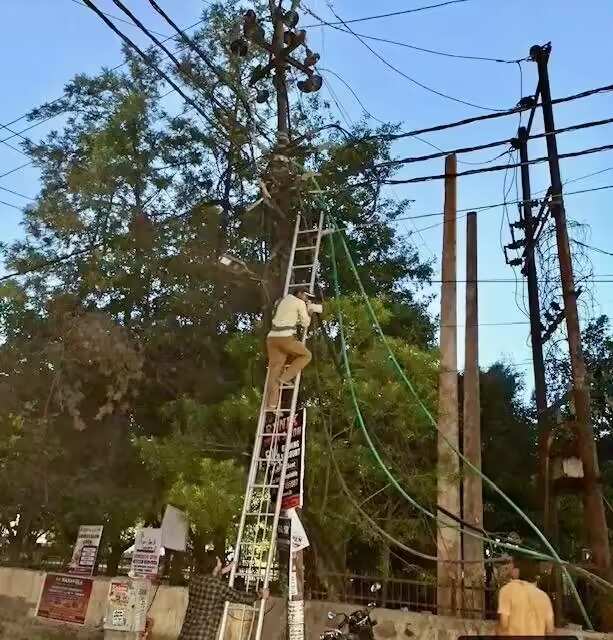
Linemen at work on fault correction in Gyan Khand, Ghaziabad.
Residents across cities complained of sleepless nights, damaged appliances and authorities failing to respond despite repeated complaints. “Every summer it’s the same story — faults, fires and long cuts. The system clearly cannot handle the load,” said Gurgaon resident Naveen Batra.At the state level, Haryana Power Purchase Centre (HPPC) has projected peak demand this year at 16,454 MW — the highest in the state’s history — and warned of deficits through the summer months despite long-term power purchase arrangements. Officials have attributed the strain to rapid urbanisation, industrial growth, extreme weather and increased residential consumption.Despite directives from Haryana power minister Anil Vij to limit outages to two hours in urban areas, prolonged blackouts continue to hit several NCR regions, raising concerns over whether existing infrastructure can cope with rising temperatures and record-breaking demand.