









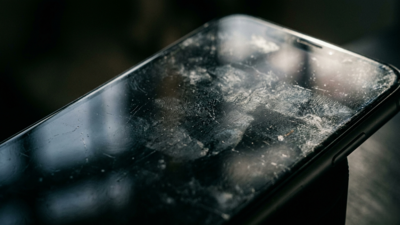
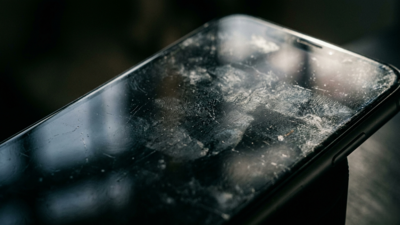
You wipe your phone on your shirt a dozen times a day without thinking twice. We all do, but here is something most of us do not know: that screen is not just glass. It has an ultra-thin protective coating working quietly in the background, and the way you clean your phone could be slowly destroying it.What is actually on your screenModern smartphone screens come with transparent nano-coatings that are designed to minimise fingerprints, prevent smudges, and maintain a sharp display. To control how oils and liquids behave on the surface, these coatings rely on characteristics known as hydrophobicity (water-repelling) or hydrophilicity (water-attracting).In some of the more advanced models, organic particles on your screen are broken down by titanium dioxide, a real chemical component that reacts with UV light. According to research published in the journal Photochem, this photocatalytic activity, combined with a superhydrophilic surface, creates a thin water film that effectively removes dirt on its own. Most people are unaware that it is one of the most advanced features on their phone.Why your go-to wipe might be the problemThat pack of antibacterial wipes on your desk? Or the edge of your jeans? Or the alcohol wipe you took out of the first aid kit? They could all be doing damage without anyone knowing.The nano-coatings on screens are so thin that you cannot see them with the naked eye. Rough fabrics, cleaners with high ammonia content, and alcohol-based solutions slowly remove this layer. Once it is gone, it cannot clean itself anymore, and your screen is more likely to get smudged, harder to clean, and easier to scratch. The study, Transparent Self-Cleaning Coatings: A Review, shows that even small scratches can disrupt the delicate balance among hardness, flexibility, and transparency that manufacturers work so hard to achieve.In other words, every time you aggressively wipe your screen with the wrong material, you are taking the life out of your phone.
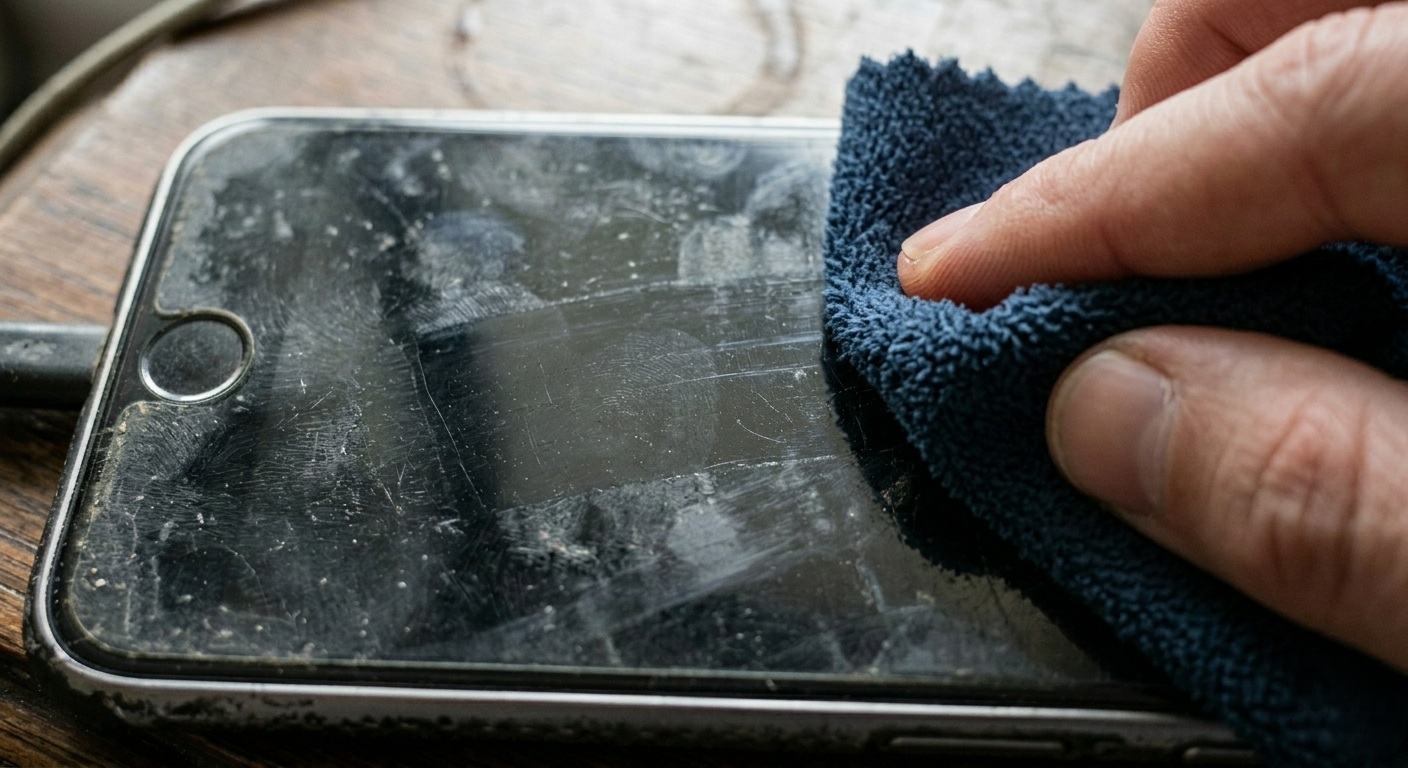
Aggressively wiping your screen with the wrong materials slowly removes the protective layer, making it prone to smudges and scratches.
So what actually works?A soft, dry microfiber cloth is the answer. If your screen needs a little more help, dampen the cloth slightly with distilled water. Do not use tap water because it can leave mineral deposits. You also need to make sure you are not scrubbing; just a gentle wipe is fine.The list of things to avoid is longer than most people think. Even paper towels and tissues are too rough for your phone screen. Wet wipes containing ammonia or alcohol, as well as household glass cleaners and disinfectant sprays, are among the quickest ways to damage your screen. Even wiping your screen with your shirt, which most people do, causes the same kind of slow damage to the surface. Many premium phone brands include a microfiber cloth in the box for this exact reason. If yours is buried in a drawer somewhere, now is a good time to dig it out.When the damage is already doneIf your screen looks duller, smudges more easily, or has tiny scratches on it that were not there before, the coating may be worn down. You should be on the lookout for these signs: more glare, colours that do not quite look right, or a screen that never looks clean, no matter how much you wipe it.If this happens, the best thing to do is get a good screen protector, preferably one with its own oleophobic coating, or take it to a repair shop to see how bad the damage is. Finding it early helps keep the value of your phone and its screen.Your phone deserves betterWe spend hundreds, sometimes even thousands, of dollars on our phones, and then clean them like our kitchen countertops. Taking an extra 30 seconds to grab the right cloth instead of whatever is nearby is one of the easiest ways to extend your device’s lifespan. Your phone screen was built to be resilient, but it cannot survive everything. Treat it a little better, and it will stay sharper, cleaner, and clearer for a long time.