









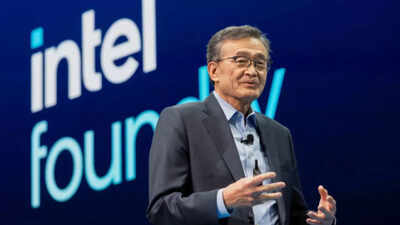
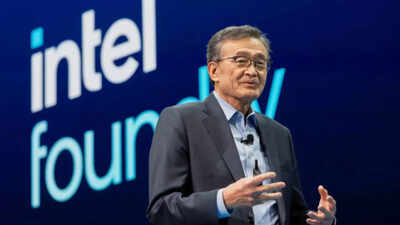
09:22Intel CEO Lip-Bu Tan has openly admitted past mistakes, telling CNBC’s Jim Cramer on Mad Money that the company’s previous reporting structure left engineers disconnected from the CEO under Pat Gelsinger. Tan has now made every engineer report directly to him, simplified the roadmap and pulled back former Intel veterans to fix the data center slide. He also flagged improving Intel 18A yields and confirmed 14A volume production in 2029, matching TSMC’s A14.Intel CEO Lip-Bu Tan isn’t tiptoeing around what went wrong at the company before he walked in. In a candid sit-down with CNBC’s Jim Cramer on Mad Money, Tan pinned Intel’s recent stumbles on a familiar villain inside big organisations: tangled reporting lines, too many silos and a leadership setup where engineers building the chips weren’t really plugged into the chief executive’s office. His first move as CEO, he said, was to rip that out. Every engineer at Intel now reports directly to him, a wiring change he says his predecessor Pat Gelsinger never made. “In the past, we made a lot of mistakes, and now we correct that mistake, and we simplify the roadmap. From day one I came on board as a CEO, I have all the engineering report to me,” Tan told Cramer.When Cramer asked, almost in disbelief, whether engineering hadn’t reported to the previous CEO, Tan’s answer was a flat “No.” Even when teams did escalate up the chain, he added, the attention wasn’t really there. “They [had] too many silos, too many people needed reporting. And even though they come to the CEO, they are not paying attention to it.”
Why Intel’s reporting overhaul matters for the chip roadmap
The reorganisation isn’t a cosmetic chart-shuffle. Tan wants to see the engineering pain points himself, hear the customer in real time and trim a product pipeline that had grown sprawling. “So I decided the best thing is to really understand where the problem is, so that I can focus on the engineering, how to redesign, simplify the products, and then get the real killer product out,” he said.The data center business is where Intel has been bleeding hardest. Server CPU unit share slipped to a multi-year low of 72% by the third quarter of 2025, down from 91% in early 2019, while revenue share fell further to 61%. “We used to have leadership in data center, and over the years we lost it,” Tan told Cramer. His counter-move: pulling former Intel veterans back into the building to run specific product lines.
Intel 18A yields climb as 14A lines up with TSMC
On the foundry, Tan said 18A yields were rough when he took the corner office, bad enough that he leaned on ecosystem partners to benchmark the data against industry standards. They’ve since flipped. “The best practice is to see seven or eight percent yield improvement per month, and now I’m seeing it,” he told Cramer. The 18A node is already powering Intel’s headline deal with Apple. Beyond that, Tan said Intel 14A is on track for risk production in 2028 and volume in 2029, lining up neatly with TSMC’s competing A14 node. “It will be the same time as TSMC. So that is a major, major breakthrough,” he said.There’s a sharper internal culture forming too. At JP Morgan’s tech conference, Tan said chip designs must now move from A0 tape-out straight to production. B0 is the only buffer. Past that, the engineer is fired.