









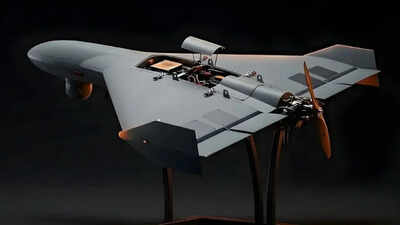
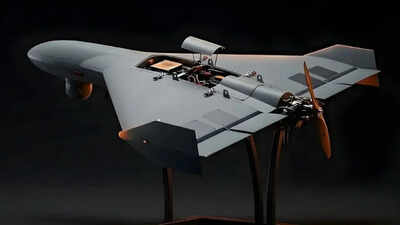
In a major boost to India’s indigenous defence technology ecosystem, Hoverit has successfully conducted an operational demonstration of its tactical loitering munition platform, Divyastra Mk-1, in Jodhpur in the presence of senior Indian Army leadership.As part of the demonstration, the Divyastra Mk-1 UAV was successfully launched multiple times from a vehicle-mounted mobile launcher configuration, showcasing the platform’s rapid deployment capability, battlefield mobility, and tactical launch readiness under field conditions. The exercise further validated the UAV’s ability to support dynamic ISR and reconnaissance missions in operational environments.
Indigenous content and cost advantage
What makes the Divyastra series significant is not just its performance but its manufacturing model. Hoverit has pledged to manufacture both the Divyastra Mk1 and Mk2 platforms with an impressive 95 per cent indigenous component rate, according to a report by Defence News India. This domestic focus marks a monumental departure from India’s historical reliance on costly foreign imports for advanced aerial strike systems.The startup is set to deliver these cutting-edge systems at roughly one-third the cost of comparable foreign loitering munitions. By meticulously localising critical subsystems — including data links, composite materials, sensory optics, and propulsion units — Hoverit bypasses the heavy import premiums and supply chain bottlenecks that typically drive up military procurement budgets.
Divyastra Mk-1
The Divyastra Mk-1 is an indigenous tactical UAV developed for intelligence, surveillance, reconnaissance, and precision strike missions. With an operational range of up to 500 km and an endurance of up to 5 hours, the platform is designed to support long-duration surveillance, target acquisition, and tactical engagement requirements.The UAV can be configured with EO/IR payloads, communication relay systems, and mission-specific warhead configurations, providing operational flexibility across diverse mission profiles.In contemporary conflicts, the financial viability of weapons is as crucial as their explosive yield. While traditional cruise missiles are prohibitively expensive and reserved for rare, highly specific targets, loitering munitions like Divyastra are explicitly engineered for mass deployment.The affordability allows for large-scale procurement and coordinated swarm attacks. This numerical superiority enables armed forces to overwhelm and saturate enemy air defences, ensuring sustained combat operations without draining the national defence budget.Furthermore, achieving near-total indigenisation insulates the supply chain from global geopolitical shocks and clears the runway for robust export opportunities. A platform built with 95 per cent local hardware is free from the restrictive regulatory red tape and end-user licensing agreements typically imposed by foreign parts suppliers.
Technical specifications
The Divyastra Mk-1 is a fully autonomous loitering munition with a flight endurance of up to five hours and an operational range of 500 kilometres. It can reach attack speeds between 300 and 400 kilometres per hour and carry a payload capacity of 15 kilograms. The platform is equipped with AI and swarm capability, enabling precision strike, loitering, and decoy operations across diverse mission profiles.