









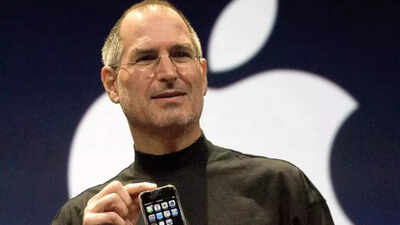
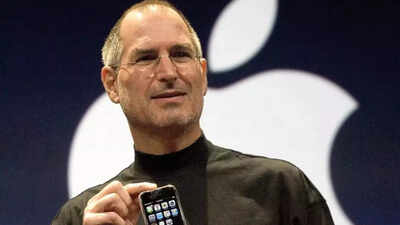
In August 1999, Apple founder Steve Jobs unveiled the Power Mac G4, calling it “the most powerful personal computer ever brought to market.” According to a report by Business Insider, the computing speed of the machine was capable of one gigaflop which triggered US export controls, meaning Apple was prohibited from shipping it to more than 50 countries including China, Iraq and North Korea. Jobs turned this restriction into a marketing opportunity. At Apple Expo, he told the audience: “The Power Mac G4 is so fast that it is classified as a supercomputer by the U.S. government.” Apple even ran an ad campaign showing tanks surrounding the computer, with a voiceover declaring: “For the first time in history, a personal computer has been classified as a weapon by the U.S. government.” The ad ended with a jab at Intel PCs: “Well, they’re harmless.”Behind the scenes, Apple lobbied Washington to ease restrictions and eventually succeeded but publicly Jobs turned the export ban into proof of Apple’s technological edge.
Anthropic’s AI models face export ban
Fast forward to 2026, and AI giant Anthropic is facing a similar kind of situation. The Trump administration recently imposed a ban on its latest AI models and ordered the company to restrict foreign nationals’ access to its Fable 5 and Mythos 5 models, citing national security concerns that the systems could be jailbroken to bypass safeguards. Anthropic disabled the models for all customers while it is still working to resolve what it describes as a misunderstanding with the White House. The company has long emphasised AI safety, even limiting access to its Mythos Preview earlier this year because of its ability to outmatch human cybersecurity experts.While Apple’s Power Mac G4 was still sold widely despite restrictions, Anthropic’s ban is more severe, halting access altogether.
Some analysts believe there is more behind ban on Anthropic’s latest AI models than ‘Amazon complaint’
The sudden ban on Anthropic’s Fable and Mythos AI models by Trump administration may not have been triggered solely by Amazon’s warning, according to a report by Axios. Analysts and officials are of the opinion that the company’s inability to effectively communicate with the White House and perceived disregard for a recent cyber executive oder played a major role. “Everybody said Anthropic was a bad actor… They screwed us,” one administration official said. On June 11, Amazon CEO Andy Jassy raised alarms with the Treasury Secretary Scott Bessent, warning that Anthropic’s frontier models could be jailbroken. Administration officials claim that Anthropic knew that such vulnerabilities existed but still chose to distribute the models. By the night of June 12, the government imposed stringent export controls, forcing Anthropic to take the system offline for all non-US users.As per the Axios report, behind the scenes, sources say that Anthropic has struggled to “speak the administration’s language.” One insider described the relationship as “like they just speak in different languages,” noting that personality differences and optics worsened tensions. Also, the company’s dismissive blog post about Amazon’s complaint, coupled with its decision to enlist a cybersecurity expert viewed by the administration as politically hostile, further fueled mistrust.