










Years ago it was the Covid pandemic, then Russia–Ukraine conflict, then came Trump’s tariffs and now the world is witnessing a raging crisis in the Middle East. Different timelines, different circumstances but each time, the impact lands closer home. In the first week of the raging conflict with Iran, the US spent $11.3 billion. But this isn’t really about America, Iran, or Israel in the abstract — it’s about you and how much you will have to pay!But what does a war thousands of kilometres away have to do with your monthly grocery bill, your child’s education abroad, or your savings? Well, the impact runs deeper.
After the US and Israel launched joint strikes on Iran on February 28, its ripple effects may land squarely on the Indian dinner table. As the US-Iran conflict tightens its grip on global energy routes, households are discovering that geopolitics doesn’t stay on maps, it shows up in kitchens, commutes, and bank balances. The big question: How will the Middle East war reshape your monthly budget? The crisis may start showing up in your bills through a range of spendings – let’s have a closer look at how your grocery bill might look!
First comes the LPG shock
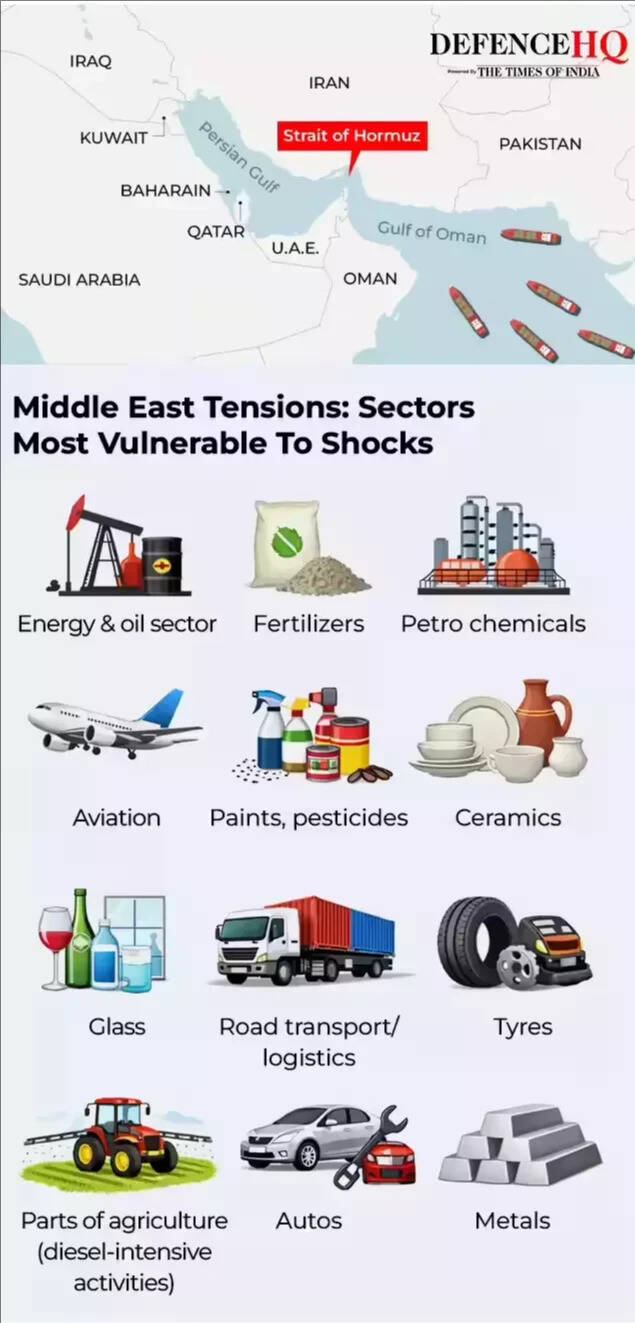
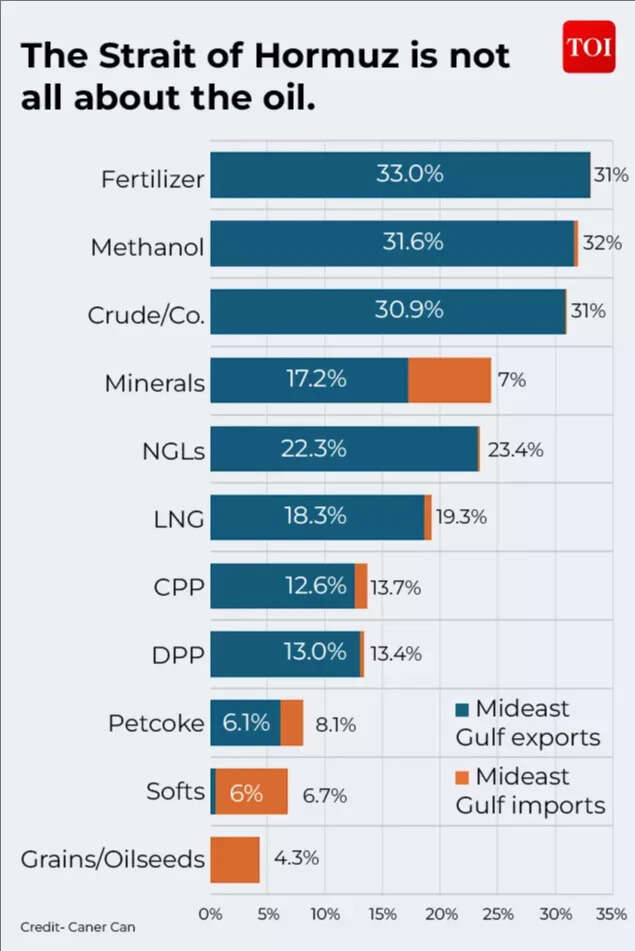
The most immediate impact is being felt in the kitchen, even before the stove is turned on. With nearly 90% of India’s LPG imports routed through the Strait of Hormuz, supply disruptions have led to panic buying and reports of black marketing are also emerging. Earlier this month, LPG rates saw a sharp revision – as of March 10, 2026, a domestic 14.2 kg cylinder costs Rs 913, up from Rs 853 on March 1. Commercial cylinder prices have risen even more steeply, from Rs 1,768.50 to Rs 1,884.50, marking a Rs 115 hike. Rishi Shah, Partner and Economic Advisory Services Leader, Grant Thornton Bharat told TOI that “households may look to prepare for 15-20% effective fuel and cooking cost increases over the next quarter, if the disturbances persist. Fundamentally this is driven by global supply disruptions, something outside government control.”
Now pour in a little oil
Another reason why your grocery bill could suddenly feel heavier, could be cooking oil prices. According to a TOI report, Sunflower oil is now about Rs 15 more per litre while mustard oil costs Rs 10 more. Meanwhile, blended oils have seen a jump from roughly Rs 880 to Rs 1,000 for a five-litre can online, quietly adding to the strain on household budgets, the report said.Mumbai APMC grain market director Nilesh Veera told TOI that wholesale rates went up by Rs 5 per litre in the past few days, but then dropped slightly. “So the hike is now Rs 2-3 per litre which raises retail prices proportionately,” he said.The reason lies in India’s heavy import dependence,over 56% of its edible oil needs were met through imports in 2023–24.What makes it worse is the supply chain squeeze. Russia and Ukraine together account for 70–90% of the country’s sunflower oil imports, and disruptions in Black Sea routes, along with tensions around the Red Sea and Suez Canal, have tightened supplies and driven up freight costs. According to the Solvent Extractors’ Association (SEA), the risk of disrupted shipments from Russia and Eastern Europe, combined with higher transport costs for palm oil, is fuelling price hikes. “The risks of disrupted sunflower oil shipments from Russia and Eastern Europe, and higher freight costs for palm oil, have caused price hikes, forcing traders and consumers to closely monitor the situation to navigate supply chain risks,” SEA said
Now add the ingredients
Pulses may face pressure: Think your everyday dal is completely insulated from global tensions? Not really. India imports around 5–6 million tonnes of pulses each year: tur, urad, and lentils, from Myanmar, Canada, and parts of Africa. Now while supply lines remain largely intact, some pressure is coming from rising logistics costs. Higher freight charges, war-risk premiums, and increased insurance costs are pushing up the landed price of these imports, costs that are likely to trickle down to retail, potentially adding to food inflation.As Bimal Kothari, chairman of the India Pulses and Grains Association (IPGA), explains to ET, “Some cargo does pass through the Red Sea, so any disruption there could create constraints in imports. War risk premiums have also increased, pushing up insurance costs for container shipments.” “However, much of India’s pulse imports are unlikely to be directly affected,” the expert assured. Fruits and dry fruits: Your fruit basket could be next in line. India relies on competitively priced apple imports from Iran, and any disruption could quickly alter market dynamics. In 2024, Iran made up nearly 23% of India’s apple imports, along with a significant share in dry fruits like pistachios (around 60%) and almonds (about 39%). At the same time, anjeer, pista, saffron and apricots will also see the impact. With uncertainty around shipping routes and trade flows, traders are already turning cautious. “Traders are already factoring this uncertainty into future trading strategies. Given the price advantage of Iranian apples, any prolonged disruption leading to reduced imports could force a recalibration of sourcing strategies and reshape dynamics in India’s apple market,” Harish Chauhan, Convener, Himachal Pradesh’s Sanyukt Kissan Manch told ET.Expensive sweet tooth: Time for dessert? Your sweets might also get pricier. The surge in dry fruit prices is already hitting mithai makers and bulk buyers. As Vicky Jaisinghani of A-1 Sweets, Ulhasnagar, noted, imported Pishori pista has jumped from Rs 2,600 to Rs 3,400 per kg, while Iranian pista has risen from Rs 1,650 to Rs 2,400. Despite the spike, quality can’t be compromised, as premium ingredients are key to maintaining taste. Mayur Shah of Pravinchandra & Co. in Masjid Bunder said, “We have not hiked our rates, but may do so once existing stocks are over.”
Daily used items might see hikes
Petrochemical inputs are widely used across everyday products, from soaps and shampoos to creams, hair oils, and even packaging like bottles and tubes, making FMCG companies highly sensitive to crude price movements. These derivatives account for over a quarter of their input costs. According to company executives, prices of key crude derivatives such as plastics, resins, and polymers including polyethylene and polypropylene used in packaging, have surged by up to 25% in the past month. A similar spike has been seen in polyester staple fibre, further adding to cost pressures across the sector. And oh, your statement shoes? The are also set for a rollercoaster ride! Harkirat Singh, managing director of shoe brand Woodland India told ET that the company’s suppliers “are asking us to increase prices as they are buying raw materials at significantly higher costs.” From April, the company may increase prices by 8–12%.
Your home makeover may get pricier!
Painting your house could soon cost more, as soaring crude prices push up paint costs. Decorative paints may become 9–10% more expensive, according to ET. For instance, Berger Paints is set to raise prices by around 5% on average for solvent-based products, waterproofing emulsions, and industrial paints from March 25, as rising input costs begin to bite. CEO Abhijit Roy told ET that the company is closely monitoring raw material prices, which are fluctuating daily, and hinted that another round of hikes may follow if pressures persist.Planning to bring home a new TV or AC? You might want to brace for a higher bill. Consumer electronics and appliances are expected to become 5–6% costlier, largely due to their heavy reliance on plastic components, whose prices are rising sharply.“We will increase prices from April, possibly by 5–6%,” Kamal Nandi of Godrej Enterprises told ET. He noted that input costs have surged significantly over the past month, with plastic suppliers repeatedly hiking prices and hesitating to commit to long-term contracts, adding further uncertainty for manufacturers and, ultimately, consumers.
Commuting costs: Paying the ‘war surcharge’
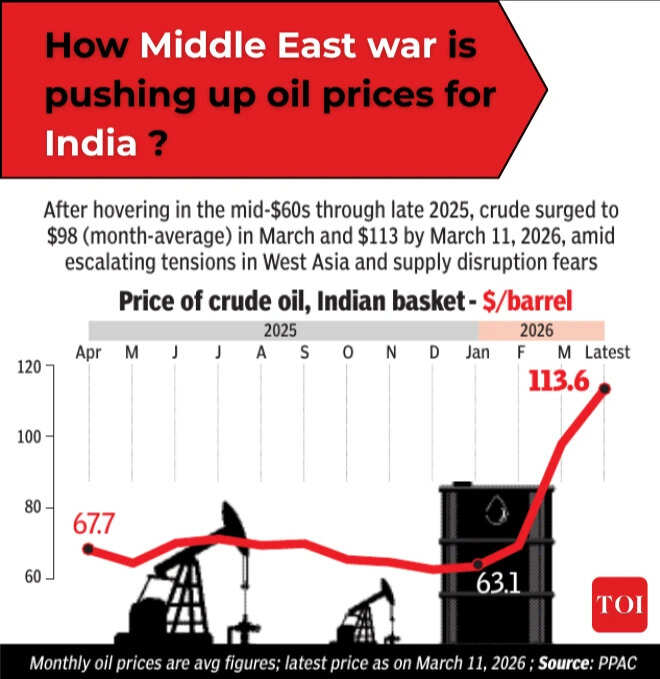
India buys nearly 40% of its crude oil needs from the Middle East, although discounted Russian crude has offered some cushion in recent months. Still, global prices are surging, Brent crude has crossed the $100-per-barrel mark, and Iran has warned prices could spike to as high as $200 if the conflict escalates further.This has pushed up international prices of petrol, diesel, and aviation turbine fuel, with spot rates, what refiners actually pay, running even higher than futures. Refining margins, especially on diesel and ATF, have also risen sharply.Yet, domestic fuel prices have remained unchanged for now. This means state-run oil companies are absorbing losses on every litre sold. In the near term, the burden is likely to be shared between oil marketing companies and the government.
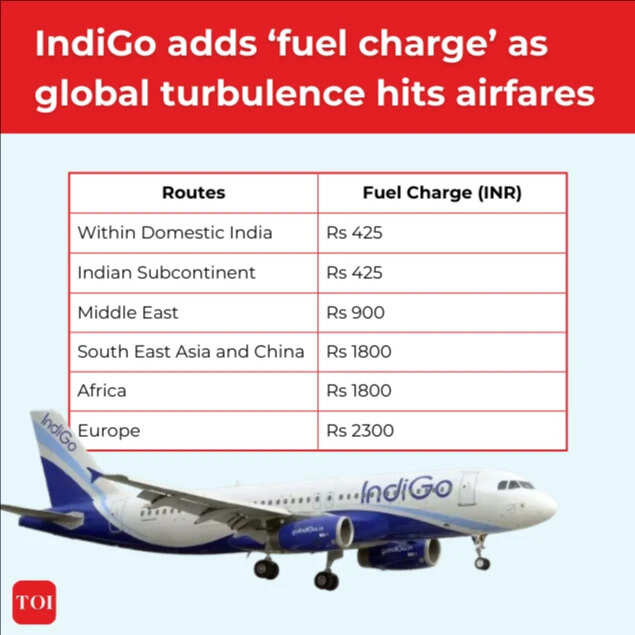
Meanwhile, air travel is getting costlier as airlines have begun passing on the impact of rising aviation turbine fuel (ATF) prices. IndiGo has introduced a fuel surcharge ranging from Rs 425 to Rs 2,300 on domestic and international flights, while Air India and Air India Express announced a Rs 399 surcharge on domestic tickets starting March 12. At the same time, Akasa Air also announced introducing a fuel surcharge ranging from Rs 199 to Rs 1,300 on domestic and international flight tickets. “There has been a significant increase in the price of aviation turbine fuel, driven by evolving geopolitical developments in the Middle East,” Akasa Air said in its statement.
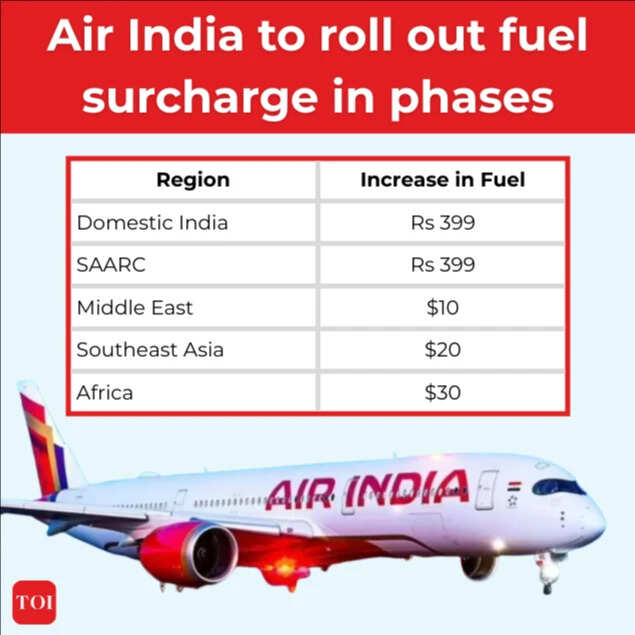
Other carriers are signalling similar moves. SpiceJet has warned that fare hikes may be unavoidable if fuel prices remain high, with founder Ajay Singh stating that airlines will have “no choice” but to increase fares and urging the government to cut jet fuel taxes. With ATF costs surging amid Middle East tensions, flying is set to become more expensive in the coming weeks.
Car purchases to get expensive
So maybe no trips to far-off destinations—but what about buying a car, especially since petrol prices aren’t rising? You might want to hold off a bit, though, as automakers are preparing for price hikes of 2–3%. Luxury brands Mercedes-Benz and Audi have already announced increases of around 2% from April 1, while mass-market carmakers are still finalising their revisions. Industry leaders have warned that these hikes could dent recent sales gains driven by GST cuts, but say they have little choice as volatile supply chains continue to push costs higher.
Education: The indirect cost spiral
Planning to study abroad? You may need a bigger budget than expected. The escalating Middle East conflict has weakened the rupee, which has slipped to a record low of around 93.12 against the US dollar. A weaker currency makes everything, from tuition fees to accommodation and daily expenses, more expensive for Indian students paying in foreign currency, adding significant pressure on family finances. As Middle East tensions continue, families are becoming cautious about sending students to the region. While cancellations remain limited, some are considering deferrals or other destinations. Alternatives are getting costlier as the rupee weakens. Study abroad expenses have surged, for instance, a year at Harvard has risen from about Rs 53 lakh in 2021 to over Rs 78 lakh, according to a TOI analysis.
Portfolio loss
The shock on Dalal Street isn’t just a story for investors, it’s quietly hitting household finances too. The recent selloff triggered by the US-Iran conflict has wiped out nearly Rs 34 lakh crore in investor wealth within weeks, shrinking the value of stocks, mutual funds, and retirement savings. For many families, this means their portfolios are suddenly worth much less, forcing them to rethink spending, delay big purchases, or put off plans like buying a home or car.While the immediate impact has been severe, experts say the longer-term outlook for the Indian stock market remains relatively stable. Compared to other global economies, New Delhi’s exposure to oil shocks is somewhat cushioned, as energy imports form a smaller share of overall consumption. Lower dependence on foreign investor flows has also helped limit volatility. According to Moody’s Analytics, India has seen only moderate corrections in line with typical market cycles, suggesting that despite the current turbulence, the broader growth trajectory remains intact.Referring to countries like India and China, Moody’s report added, “although both economies are large net oil importers from Gulf Cooperation Council economies in absolute terms, energy imports account for a smaller share of domestic consumption, limiting their vulnerability to oil price shocks. Foreign investor participation in equity markets is also lower, and in China’s case, capital controls further limit volatility. These structural factors have helped shield their equity markets from sharper declines.” So, how will your bills look at the end of this month?The escalating, and more importantly US-Iran conflict could hit Indian households, driving up costs across almost every aspect of daily life. In the kitchen, LPG prices have risen while edible oils, pulses, lentils, and imported dry fruits could climb due to disrupted supply chains and higher logistics costs. Fuel inflation is adding to the burden, with crude crossing $100 a barrel, prompting petrol, diesel, and aviation turbine fuel surges, further pushing transportation costs. On Friday, state run oil marketing companies increased the price of their premium-grade power petrol by over Rs 2 per litre, while keeping the prices of regular petrol and diesel unchanged.For households, this turbulence is a reminder of how quickly global shocks can ripple through personal finances. While markets may stabilise over time, the immediate hit to savings and investments can influence spending decisions, delay financial goals, and heighten uncertainty. If volatility persists, families may continue to adopt a more cautious approach, cutting back on discretionary expenses and prioritising financial security, until clearer signals of stability emerge.