











A little blood while brushing often gets brushed aside. It feels minor, even routine. But the body rarely signals without reason. Bleeding gums may be one of those quiet alerts that point beyond the mouth. Over the past decade, doctors and researchers have started to connect gum health with heart disease, chronic inflammation, and even kidney stress.The idea is simple but powerful: what starts in the gums does not always stay there.
Not just a dental issue: understanding the first signs
Bleeding gums are most often linked to gingivitis. It begins with plaque, a sticky film of bacteria that builds up along the gum line. If not removed, it irritates the tissue and causes inflammation.Dr Bhanu Mishra, Consultant Nephrologist, Fortis Hospital, Shalimar Bagh, explains, “The issue of bleeding gums is commonly considered an insignificant matter in the field of dentistry; however, in actuality, it is one of the first manifestations of various diseases.”What makes this important is how early it appears. Gum bleeding can show up long before deeper problems take shape. It acts like a warning light on a dashboard. Ignoring it does not switch off the problem. It only delays attention.

Chronic gum inflammation allows bacteria to enter the bloodstream, which may increase the risk of heart disease, worsen kidney conditions, and trigger systemic inflammation.
The inflammation link: where it all begins
Inflammation is the body’s way of fighting harm. But when it becomes chronic, it starts doing more damage than good.In gum disease, inflammation is not limited to the mouth. The swollen, sensitive gums allow bacteria to enter the bloodstream. Once inside, they trigger an immune response across the body.Dr Mishra notes, “The chronic inflammation of gums promotes the entrance of pathogenic bacteria into the blood and activates the immune response of patients to fight them.”This constant immune activation creates a low-grade inflammatory state. Over time, that can affect blood vessels, organs, and overall immunity. It is not a sudden shift. It builds slowly, often without obvious symptoms.
The heart connection doctors now take seriously
One of the strongest links being studied is between gum disease and heart health. Researchers believe that bacteria from infected gums can contribute to the formation of plaques in arteries. These fatty deposits narrow blood vessels and raise the risk of heart attacks and strokes.Dr Mishra adds, “Inflammation increases the risk of developing cardiovascular diseases, such as coronary artery disease. For example, according to some research, people with gum problems have a greater likelihood of developing atherosclerosis when fatty deposits clog arteries.”This is not just theory. Large studies have explored this link:A review by the National Institutes of Health (NIH) highlights how periodontal disease is associated with cardiovascular conditions.The Centers for Disease Control and Prevention (CDC) also notes growing evidence connecting oral health with heart disease.These findings do not say gum disease directly causes heart disease. But they do show a clear relationship that doctors cannot ignore.
What it may mean for kidney health
The connection does not stop at the heart. There is growing interest in how gum health may affect the kidneys.Dr Mishra explains, “Emerging evidence suggests a possible link between gum disease and kidney health. Chronic inflammation caused by periodontal infections may contribute to the progression of kidney disorders by increasing systemic inflammation and bacterial load in the bloodstream.”For someone already dealing with chronic kidney disease, this added inflammatory burden can make things worse. It puts extra strain on the body’s filtering system.A study supported by the National Institute of Diabetes and Digestive and Kidney Diseases (NIDDK) also points to inflammation as a key driver in kidney disease progression.This overlap shows how interconnected the body truly is. A problem in one place can ripple through others.
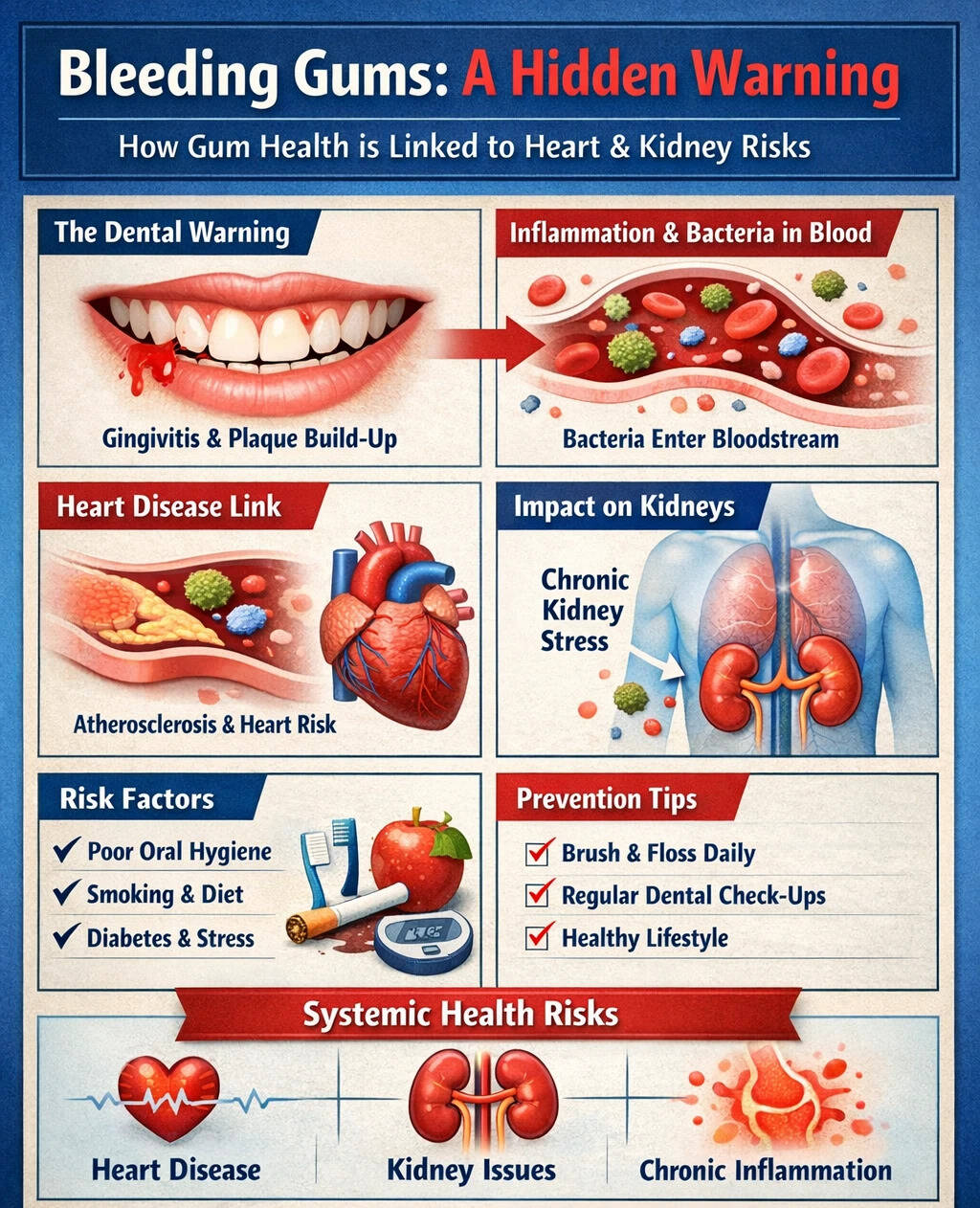
Research from global health bodies supports this growing link. Early care, good oral hygiene, and regular check-ups can help prevent complications and protect overall health.
Everyday habits that quietly increase the risk
Many people assume gum disease is only about brushing. It is not that simple. Several everyday habits can worsen the condition:
- Poor oral hygiene and irregular dental visits
- Smoking or tobacco use
- Diets high in sugar and processed foods
- Chronic stress, which weakens immune response
- Conditions like diabetes that affect healing
These factors do not act alone. They combine over time. The result is a slow progression from mild gum irritation to deeper periodontal disease.
What should be done before it gets serious
The good news is that gum disease is often reversible in its early stages. And even when it progresses, it can be managed with timely care.
Simple steps make a difference:
- Brush twice daily with proper technique
- Floss regularly to remove hidden plaque
- Visit a dentist at least once every six months
- Watch for early signs like redness, swelling, or bleeding
- Manage conditions like diabetes and high blood pressure
- Eat a balanced diet rich in vitamins, especially vitamin C
Most importantly, do not ignore bleeding. It is not “normal,” even if it feels common.Addressing gum health early may reduce not just dental problems, but also the wider risks linked to inflammation and heart health.Medical experts consultedThis article includes expert inputs shared with TOI Health by:Dr Bhanu Mishra, Consultant- Nephrologist, Fortis Hospital, Shalimar Bagh.Inputs were used to explain how bleeding gums can be an early sign of underlying inflammation and its link to heart health, and why timely dental care and medical evaluation are important.