








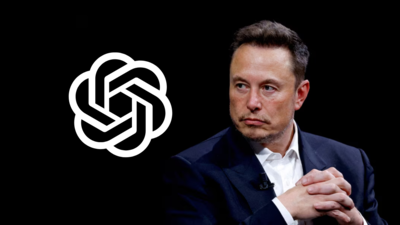
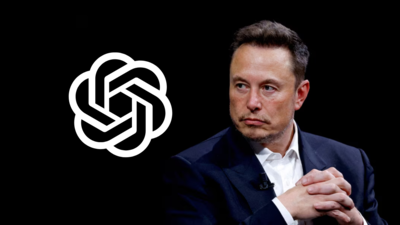
Elon Musk criticises OpenAI’s shift to closed-source, profit-driven AI.
OpenAI has stepped up its criticism of Elon Musk, accusing the billionaire of attempting to reframe his legal challenge against the company’s nonprofit arm as the case moves closer to trial.In a sharply worded statement, OpenAI said Musk had filed a motion “at the eleventh hour” that appeared to shift his stance on the organisation’s structure. The company argued that the move was aimed at reshaping the narrative rather than strengthening the substance of his claims, suggesting a tactical pivot as legal scrutiny intensifies.The exchange comes as fresh details of Musk’s amended lawsuit shed light on his latest demands. According to the filing, Musk is now seeking more than $150 billion in damages from OpenAI and Microsoft, but has asked that any financial award be directed to OpenAI’s nonprofit arm rather than to himself personally. He has also called for the removal of chief executive Sam Altman and president Greg Brockman from the nonprofit’s board, along with the surrender of any equity they hold to the entity.Musk’s lawsuit centres on his claim that OpenAI deviated from its founding principles. Established in 2015 as a nonprofit with Musk as a co-chair, the organisation was intended to develop artificial intelligence for the broader benefit of humanity. He alleges that after his departure in 2019, OpenAI shifted towards a for-profit model in partnership with Microsoft, undermining its original mission.OpenAI, however, has pushed back strongly on those assertions. It said the case has never been grounded in legitimate governance concerns, but instead reflects Musk’s broader ambition to gain influence and slow down a rival in the rapidly evolving AI landscape. The company maintained that its hybrid structure is necessary to attract capital and scale the development of advanced AI systems.The statement also characterised Musk’s legal action as a “harassment campaign” driven by personal motivations, including rivalry and ego. By introducing new arguments at a late stage, OpenAI suggested, Musk is attempting to preserve credibility while distancing himself from what it described as a weak legal foundation.With the trial set to take place later this month in Oakland, California, the dispute is fast becoming one of the most closely watched legal battles in the technology sector. Beyond the immediate claims, the case raises broader questions about how AI organisations balance nonprofit origins with commercial realities, and who ultimately controls the direction of increasingly powerful technologies.