











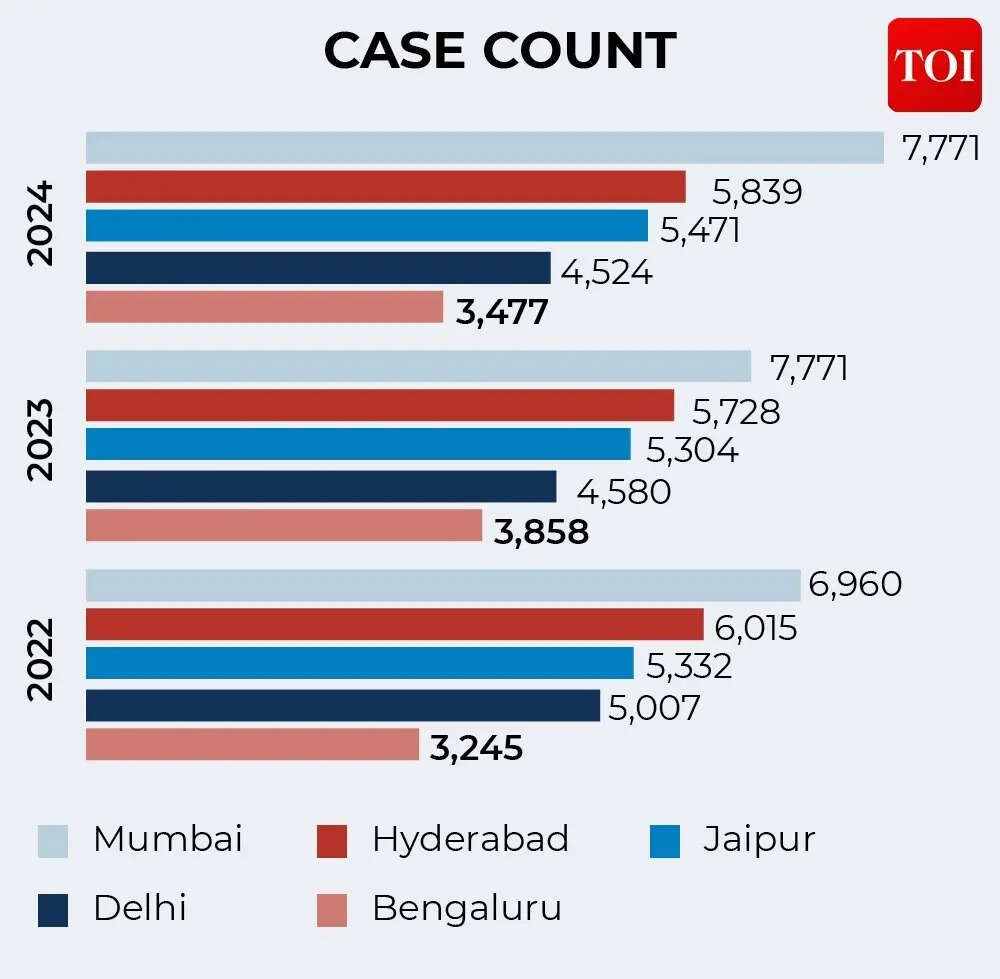
BENGALURU: India’s tech capital witnessed at least one economic offence — including forgery, cheating, fraud, financial scams, and related white-collar crimes — every 2.5 hours over the past three years (2022, 2023 and 2024) for which crime data is available.In all, the city reported 10,580 such cases during these three years. The National Crime Records Bureau’s (NCRB) Crime in India 2024 report shows Bengaluru recorded 3,477 economic offences that year alone, placing it among the top five metropolitan cities in the country for such crimes.While the 2024 figure is slightly lower than the 2023 number (3,858), it is marginally higher than that of 2022 (3,245). However, the average of about 10 cases a day continued in the latest year, indicating that the fluctuation was within expected trends going by past years’ data. During 2024, only Mumbai, Hyderabad, Jaipur, and Delhi reported higher totals.
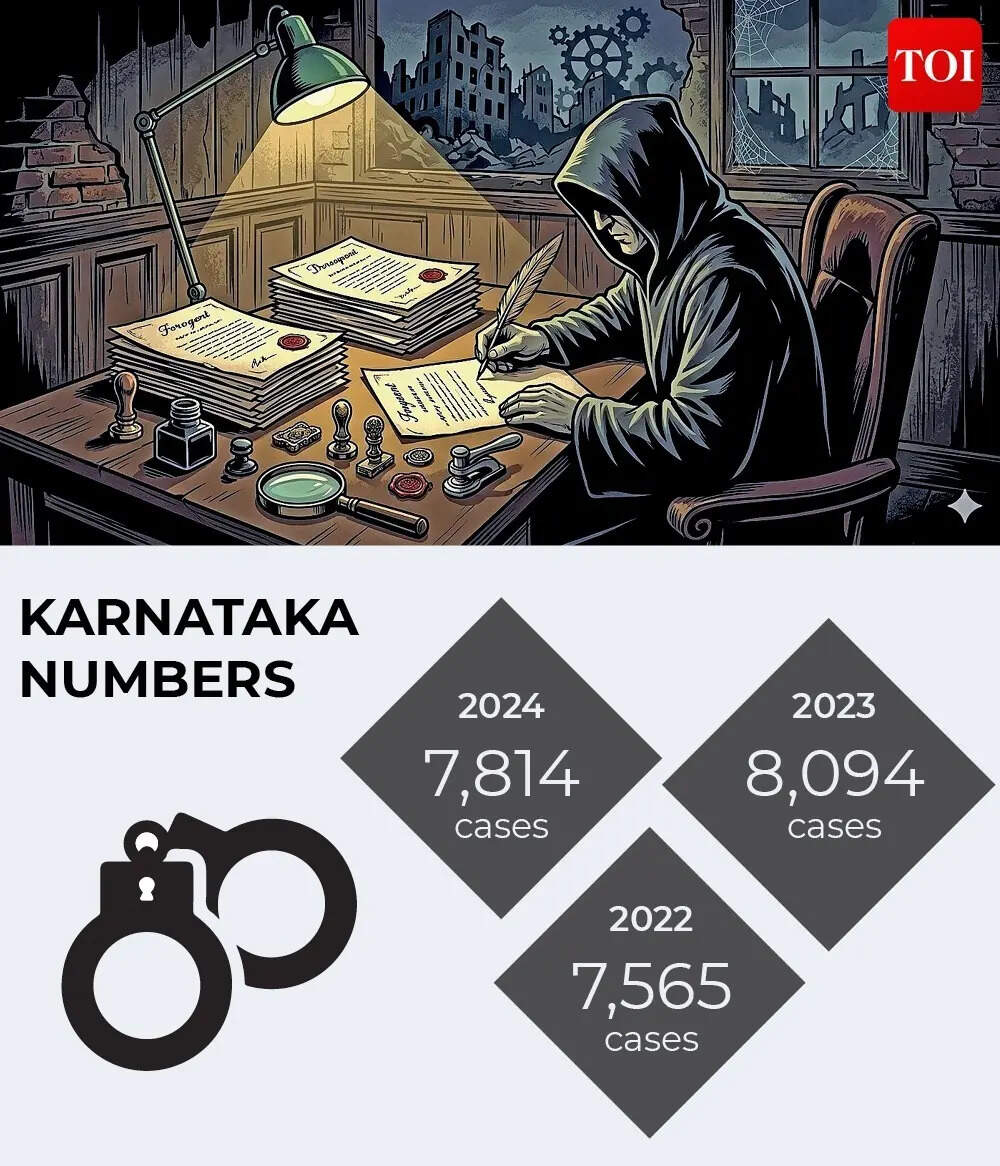
More revealing, however, is the nature of these offences. Of Bengaluru’s 3,477 economic offences, 3,249 — more than 93% — fell under forgery, cheating, and fraud. The numbers suggest Bengaluru’s urban crime profile is undergoing a structural shift: from physical theft and street crime to financial and digital deception.The trend extends beyond Bengaluru. NCRB’s statewise economic offences data shows Karnataka recorded 7,814 economic offences in 2024. Of these, 7,209 were categorised under forgery, cheating, and fraud.
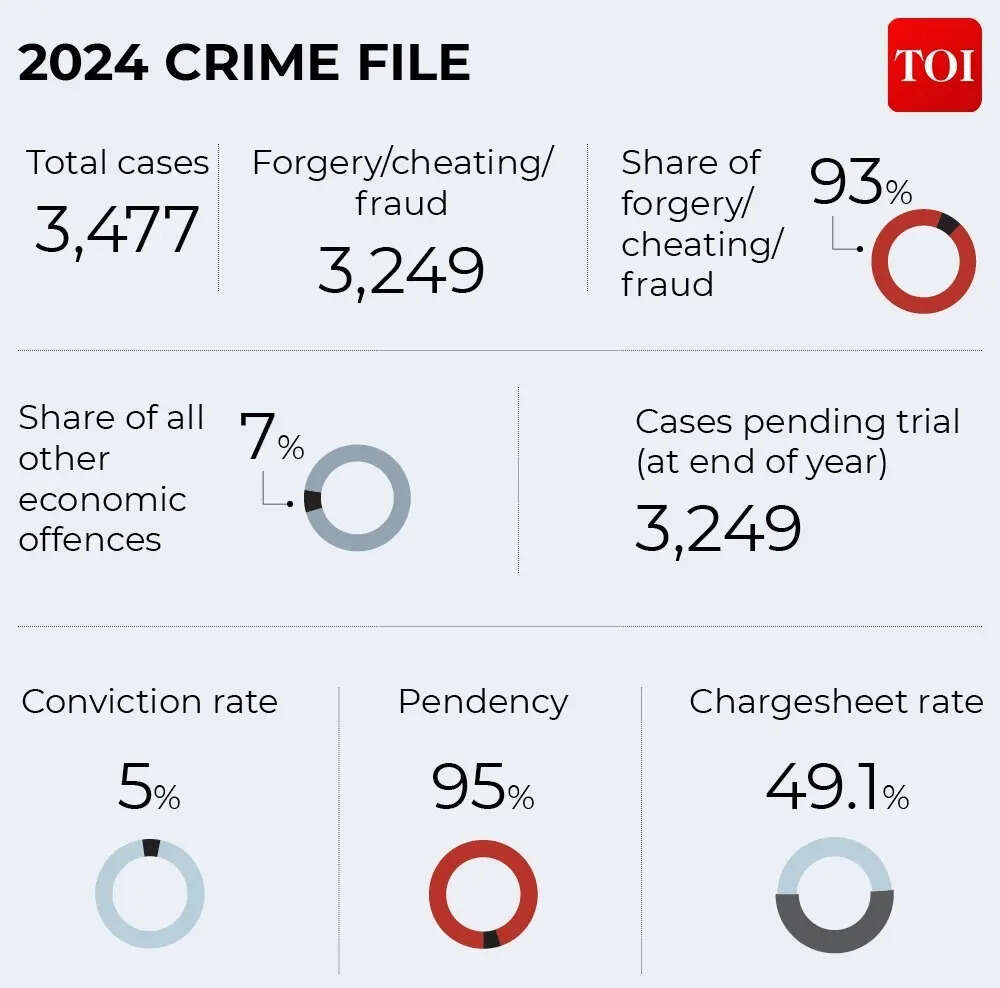
The state’s economic offence rate stood at 11.4 cases per lakh population. The data indicates that cheating and fraud now dominate Karnataka’s economic-crime landscape, mirroring trends seen in Bengaluru. The city’s economic offence rate, meanwhile, stood at 40.9 cases per lakh population.However, the crime rate calculation is based on the 2011 Census population data.Police officers say the city’s large digital economy, heavy online banking usage, and active investment culture have created fertile ground for fake investment platforms, cryptocurrency scams, impersonation fraud, trading-app cheating, and loan-app extortion.Cases pending trialThe NCRB figures also show mounting pressure on the legal system. Bengaluru had 13,616 economic offence cases pending trial at the end of 2024. The conviction rate stood at just 5%, while pendency had crossed 95%.
Police disposal was similarly weak. Bengaluru’s chargesheet rate in economic offences stood at 49.1%. Officials say financial crime networks increasingly operate across states using mule bank accounts, temporary sim cards, and encrypted communication channels, making money recovery and prosecution difficult.NCRB data also suggests Bengaluru’s biggest crime challenge is no longer confined to burglary or physical violence. The city is increasingly confronting a new form of urban crime — one built around deception, digital access, and financial manipulation. And these do not include cybercrime cases, which are listed separately by NCRB.Meanwhile, Uttar Pradesh’s capital Lucknow emerged as the top metropolitan city in the country in economic offences involving losses below Rs 1 lakh under criminal breach of trust-related cases.The NCRB’s Crime in India 2024 report showed Lucknow ranked first among 53 metropolitan cities in the “less than Rs 1 lakh” category, recording 251 such cases in 2024 — the highest in the country.Mumbai ranked second with 248 such cases, while Bengaluru stood third with 95. Other cities reporting high numbers included Surat with 63 cases, Jaipur with 40 and Nagpur with 32.The report further stated that Lucknow registered a total of 312 criminal breach of trust cases in 2024. Apart from the 251 cases involving losses below Rs 1 lakh, another 61 involved losses between Rs 1 lakh and Rs 10 lakh. The city did not record any breach of trust cases involving losses above Rs 10 lakh during the year.Overall, Lucknow recorded 1,732 economic offence cases in 2024, down from 2,446 in 2023 and 3,702 in 2022, indicating a declining trend in total economic crimes over the past three years.“Unsecured lending, partnerships, commission-based work and local trade dealings are risky in Lucknow,” said a Gujarat-based businessman, requesting anonymity.However, despite the decline in overall cases, Lucknow continued to report a high economic offence rate of 59.7 per lakh population in 2024 — significantly above the average rate of 37.5 recorded across metropolitan cities. The chargesheet filing rate in Lucknow stood at 50.8%, according to NCRB data.In other Uttar Pradesh cities, Kanpur recorded 95 criminal breach of trust cases involving losses below Rs 1 lakh, while 11 cases involved losses between Rs 1 lakh and Rs 10 lakh. Eight cases involved losses ranging between Rs 10 lakh and Rs 50 lakh.Ghaziabad recorded 12 such cases in 2024. Of these, two involved losses below Rs 1 lakh, eight involved losses between Rs 1 lakh and Rs 10 lakh, and two involved losses ranging between Rs 10 lakh and Rs 50 lakh.