








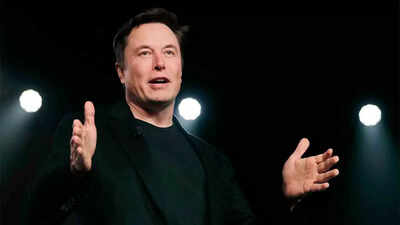
Elon Musk‘s SpaceX is reportedly moving closer to become a public company. But before the rocket company issues its IPO, investment adviser Barrett Linburg has proposed what he called a “crazy tax idea” that could potentially allow Musk to defer taxes on gains from selling SpaceX shares in the coming days. In a post shared on X, Linburg suggested that the world’s richest man can sell “SpaceX shares after lockup. Roll the gain into his own Qualified Opportunity Fund. Use that fund to build infrastructure at Starbase or finance the Terafab site.”However, Musk responded to the suggestion with a short reply saying, “I’m not selling any shares.”The exchange comes amid reports that SpaceX could file IPO documents as early as next week, with a potential listing in June. The company may reportedly seek to raise up to $75 billion through the offering. Linburg’s proposal centred around using updated Opportunity Zone (OZ) tax rules which is expected to take effect from January 1, 2027. He suggested that if Musk were to sell SpaceX shares after a reported 180-day lock-up period, he could reinvest gains into a Qualified Opportunity Fund (QOF) tied to projects near Starbase, Texas. According to Linburg, such a structure could defer tax payments for several years and potentially reduce taxes on future appreciation if investments are held long term.
Read Barrett Linburg’s ‘crazy tax idea ’ for Elon Musk before SpaceX IPO launch
In his X post, Linburg wrote, “A crazy tax idea for Elon Musk.He could become the biggest OZ investor in history.The IPO is the trigger.SpaceX goes public June 12 under the ticker SPCX and the valuation might go to $2 trillion. The largest IPO ever.Insider lockup runs 180 days. It expires around December 15.The day it ends, insiders can sell. Every share sold throws off a capital gain. For Elon, holding billions in SpaceX paper, the gain is staggering.Under the new Opportunity Zone rules that take effect January 1, 2027, any capital gain rolled into a Qualified Opportunity Fund within 180 days of the sale earns a five-year tax deferral.Sell in late December 2026. Invest in early 2027. The tax bill is not due until 2032.If the QOF investment is held for ten years, the entire appreciation comes out tax-free. No capital gains. No depreciation recapture. Zero.But Elon isn’t going to suddenly start investing in apartments or hotels in low income areas. He is going to remain obsessed with investing in his core businesses.Good news.The town of Starbase, Texas sits inside an Opportunity Zone census tract. Grimes County, where Musk is building a $55 billion semiconductor fab called Terafab, has three OZ tracts of its own.Elon could sell SPCX shares after lockup. Roll the gain into his own Qualified Opportunity Fund. Use that fund to build infrastructure at Starbase or finance the Terafab site.Then lease the asset back to the public company.SpaceX pays the rent. The rent is deductible to SpaceX. The depreciation flows to Elon and offsets his other income for a decade.Then he sells the QOF interest in 2037.No tax on the appreciation. No recapture on the depreciation. The original gain that funded it all was deferred to 2032.The IPO funds the infrastructure. The infrastructure runs the company. The taxpayer pays nothing for ten years and almost nothing forever.This is the crazy idea.The mechanics are real. The zones are real. The IPO is real.I am glad to advise his tax team. 🤠”Commenting on the post, Linburg made a similar suggestion to SpaceX employees who also have shares of the company. He further wrote, “You don’t have to be Elon to run this play.Every SpaceX employee with vested shares. Every Founders Fund LP. Every xAI early investor.Same lockup window. Same 180-day rollover. Same OZ 2.0 opening on January 1, 2027.My firm has run this play more than twenty times on Texas apartments over the past five years. Our investors defer the tax on their gain, collect depreciation for ten years, and will eventually exit with no tax on the appreciation or the recapture.”