




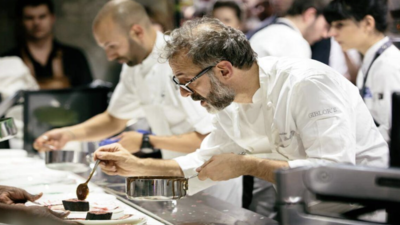
Before Massimo Bottura became a three-Michelin-star chef known around the world, he learned something far more lasting in his grandmother’s kitchen: food should be respected, stretched and never casually thrown away. One of his earliest memories is of warm milk and sugar poured over stale bread, a humble dish that turned almost nothing into comfort. That lesson stayed with him, and it later became the seed of Food for Soul, the nonprofit he founded with his wife, Lara Gilmore, to fight food waste and food poverty at the same time. Scroll down to read more…
From scraps to a table with purpose
The idea behind Food for Soul is simple, but the execution is quietly radical. The organization rescues surplus food that would otherwise be discarded and turns it into nourishing meals, prepared with chefs and volunteers. But Bottura has never treated this as just a logistics project. The goal is not only to feed people; it is to create a place where people feel welcomed, seen and valued. Food for Soul says it began with the belief that surplus food could become nourishment, hope and dignity, and its Refettorio model is built around that idea.
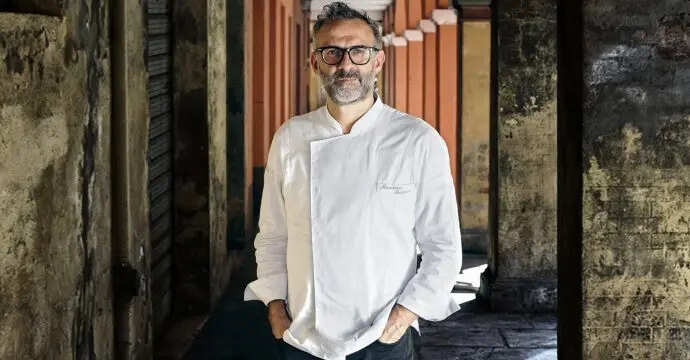
The first real proving ground was Refettorio Ambrosiano, which Food for Soul says was created in a disused 1930s theatre in Milan’s Greco district. There, ingredients that might have been wasted were transformed into meals for people in need, inside a space designed to feel beautiful rather than bleak. That detail matters, because Bottura’s project has always pushed back against the idea that aid has to look harsh to be serious. In Milan, the meal was only part of the message. The room itself said: you belong here.
Why the room matters as much as the recipe
That philosophy followed the project to Rio de Janeiro in 2016, where Bottura and Brazilian chef David Hertz helped turn excess food from the Olympic Village into thousands of meals for vulnerable people. Several reports noted at the time that the initiative aimed to serve about 5,000 nutritious meals a day, using ingredients that were close to being wasted. The model was not just about recovery; it was about reinvention, taking the leftovers of one of the world’s biggest sporting spectacles and converting them into something deeply personal.Food for Soul now describes its Refettorios as more than kitchens. They are spaces of transformation, where surplus ingredients become meals and hospitality becomes part of the intervention. The organization says each Refettorio is built to rescue food, restore people and rethink hospitality, with the atmosphere shaped as much by dignity and inclusion as by the menu itself. That distinction is important. Bottura is not trying to make charity look like luxury. He is trying to make care look like care.
A movement that has grown far beyond Italy
What initially began in the vibrant city of Milan has now blossomed into a remarkable global network. According to Bottura’s official biography, the organization known as Food for Soul has been instrumental in the establishment of 12 Refettorios across 9 different countries. Additionally, the organization’s own narrative reveals that this movement has successfully expanded its reach across 4 vast continents. A recent article from the United Nations Environment Programme highlights that the network currently spans nine nations and also mentions an exciting new Refettorio initiative that is set to launch in Nairobi, underscoring the fact that the concept continues to evolve and grow rather than resting solely on the laurels of its existing accomplishments. In essence, what started as a side project linked to a celebrity chef has transformed into a dynamic and thriving international model that actively contributes to the global food landscape.
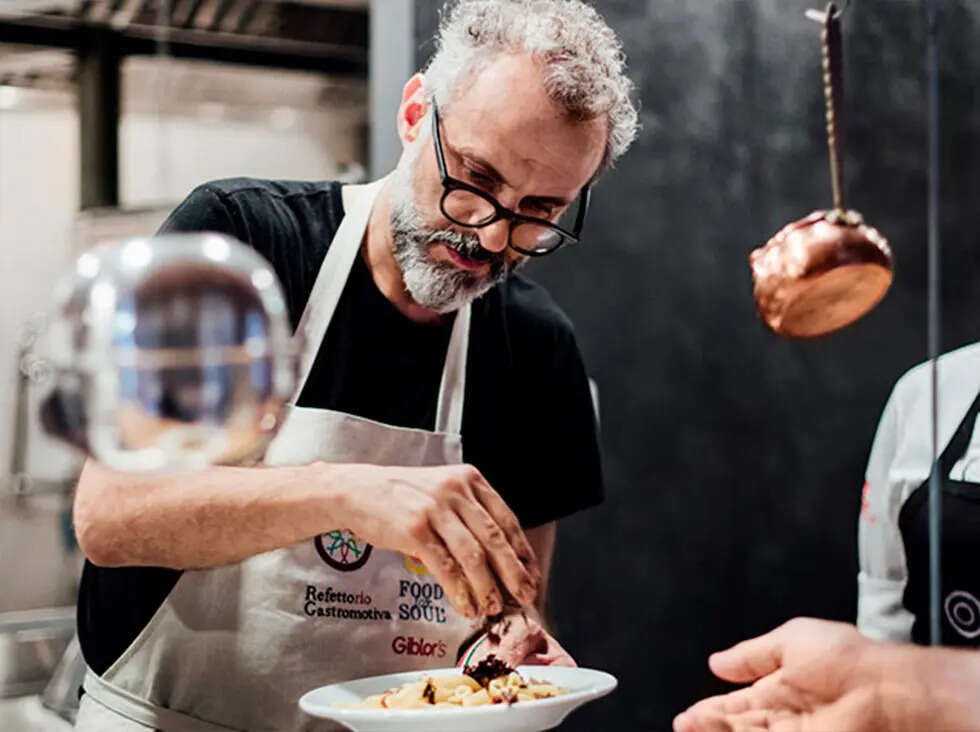
Bottura has also framed the work as part of a much bigger crisis. UNEP says that in 2022, while up to 783 million people went hungry, around 1 billion tonnes of food were wasted globally. That gap is the moral engine behind Food for Soul: the same world that throws away edible food also leaves millions without enough to eat. Bottura’s answer is not to lecture people about waste from a distance but to show what can happen when surplus is treated as a resource instead of a failure.
What makes Bottura’s idea endure
The reason Bottura’s work still resonates is that it is practical, not poetic for poetry’s sake. It takes the most ordinary things, stale bread, forgotten vegetables, excess produce, and treats them as ingredients with value. It then wraps that food in an environment of beauty, community and respect. That combination is why the project has survived beyond publicity cycles and celebrity-chef attention. It speaks to hunger, but it also speaks to shame, waste and isolation, which are often part of hunger too.The larger lesson is hard to miss. Bottura’s kitchens are not built on the fantasy that waste can be eliminated by good intentions alone. They are built on a sharper idea: that food recovery can be creative, scalable and humane at once. In a world where too much food is wasted and too many people still go hungry, that is not a sentimental gesture. It is a working answer.


