








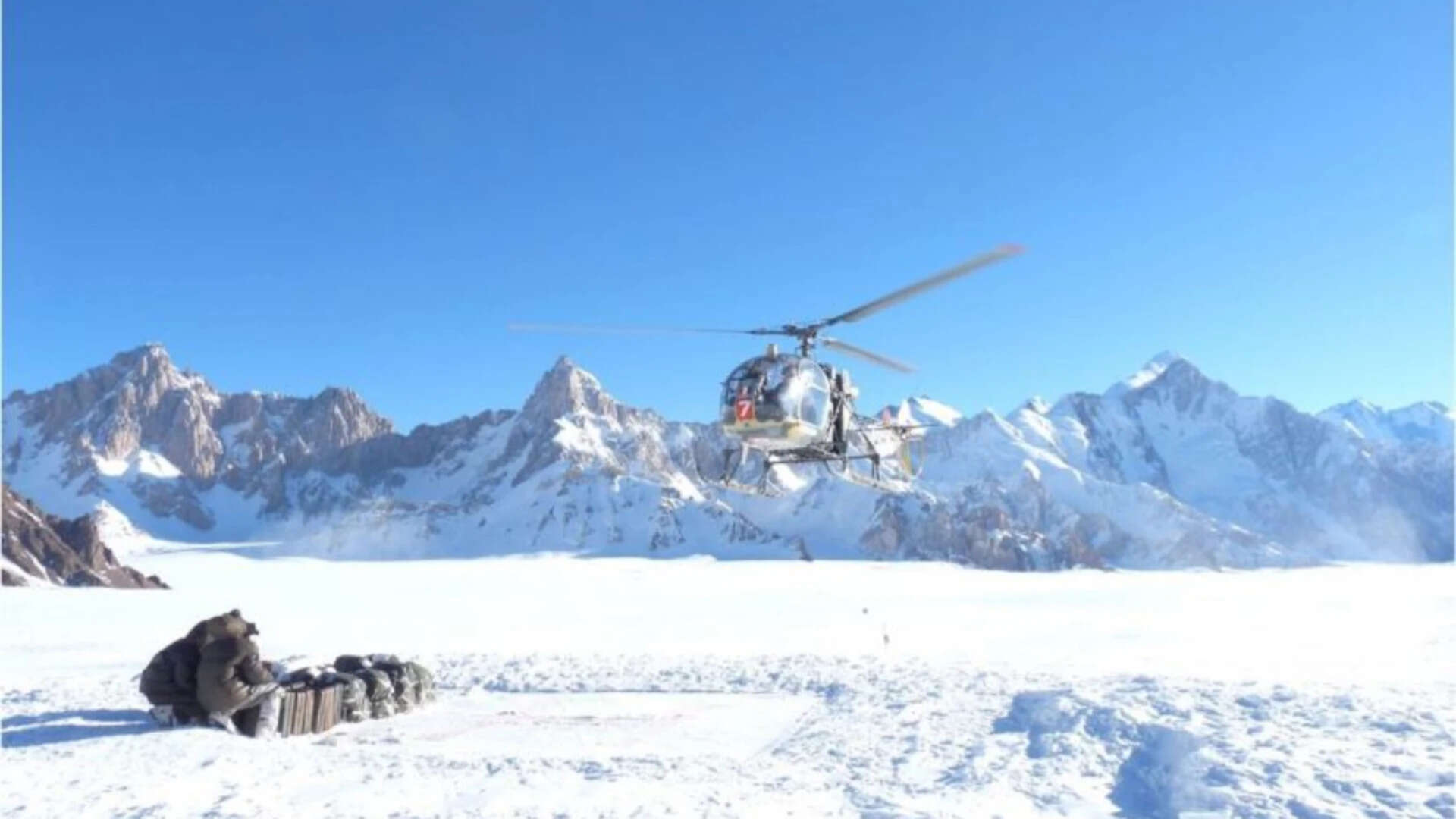
Since the 1960s, the skies throughout Himalayan frontiers have been abuzz with the sound of first the Chetak and then the Cheetah helicopters. These helicopters have regularly been taken beyond what even their designers thought was possible. In the desolate and barren super high altitudes of the frozen Siachen frontier, is where these helicopters shine. These helicopters often land at precariously placed ‘table top’ helipads on some of the highest ridge lines on the planet in aircraft designed in the 1950s. For the Cheetah it was conjured up by the French by mating the body of the Chetak’s predecessor the Aérospatiale Alouette II with the Chetak’s engines. Both the Chetak and the Cheetah are being licence produced in India by the Hindustan Aeronautics Ltd (HAL). India placed an order for the Cheetah helicopter in 1971 to serve in the high Himalayas months after the powerful chopper set a high-altitude record. A year later in 1972 the chopper set another altitude record that still stands. A mightily impressed air force and army have been using the chopper as a flying jeep, postal van, for aerial reconnaissance, spotting for big artillery guns and perhaps most importantly as an ambulance. Hundreds maybe even thousands owe their lives to the few who fly these helicopters to heights where only Indian chopper pilots fly, heights where even eagles dare to fly.
Flying where even eagles dare
Helicopters are not designed to fly at the altitudes at which Indian pilots take these helicopters to everyday. The thin air at these high altitudes make it very difficult for the rotors to generate lift. The thinner air also reduces the engine’s ability to generate power. Flying at these altitudes reduces the effectiveness to carry large weights and many sorties are carried out to carry out a task for which only one sortie has to be carried out at lower altitudes.Many of these posts in the Siachen Glacier region are dependent on helicopters as their only connect with the rest of the world, the highest of these posts are Bana top, Ashok and Sonam, which lay in the range of 21,000 feet to 19,600 feet.
Effort to replace the Cheetah
These machines are now entering the end of their service lives and the army and air force have been looking for a replacement for these choppers since 2008. A competition was held which pitched the Russian Kamov-226 against the Eurocopter Fennec. The competition did not lead to a signing of the contract.
Enter the Light Utility Helicopter
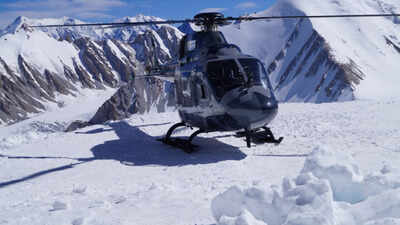
HAL meanwhile submitted proposal to manufacture a Light Utility Helicopter (LUH) in 2009 and got permission from the Ministry of Defence (MoD), as reported by Flight Global. The HAL’s LUH is designed from the outset to carry out operations in the super-rarified high altitude regions of the Himalayan frontier. The Light Utility Helicopter will carry out landings at helipads at the world’s highest helipad at 21,000 feet on the Saltoro Ridge that stands guard over the Siachen Glacier. This helipad is higher than the tallest peaks in five of the seven continents. The LUH is powered by a single HAL and Turbomeca Shakti-1U turboshaft engine. The same powerplant powers India’s two other indigenous helicopters the ALH Dhruv and the LCH Prachand in a twin engine configuration. The proven platform takes the LUH to a jaw dropping 21,300 feet. HAL is building a more powerful aircraft the HTSE-1,200 to power the aircraft.
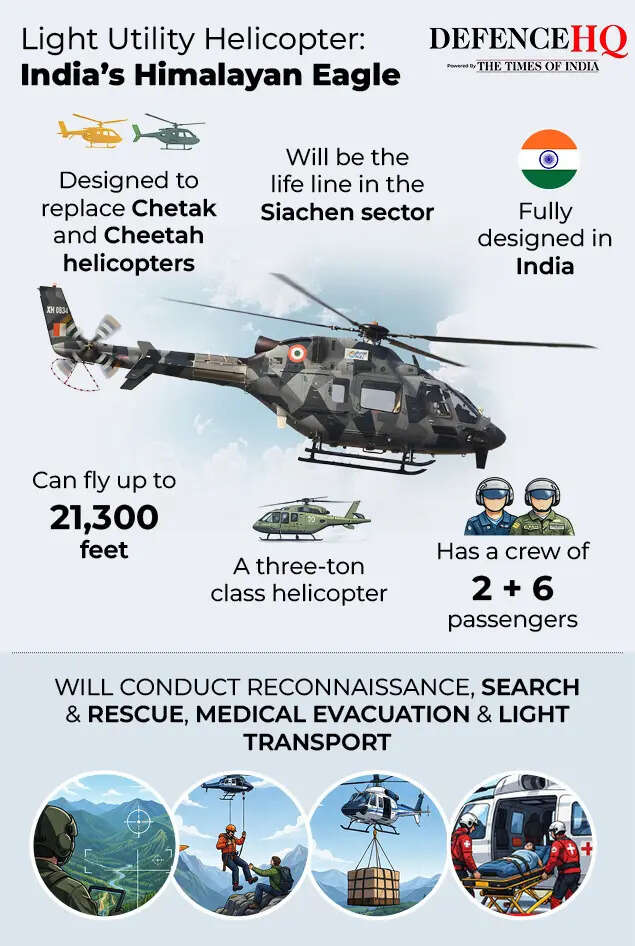
The helicopter can fly as fast as 235 km/h. The 3-ton class helicopter can carry six soldiers and has a crew of two. The helicopter will have a smart digital glass cockpit, which will make it easier for the pilots to fly the aircraft. The cockpit is night vision devices compatible. The helicopter can be used for medical evacuation, troop transport, utility, search and rescue, reconnaissance missions, surveillance and for VIP transport. As it starts replacing the Cheetah helicopter, this helicopter will become the lifeline of Indian soldiers facing the enemy in the Siachen Glacier as well as in other high altitude areas.
Current status
Prototypes of the helicopter have been flying since September 2016, for almost a decade. During the testing period the helicopter has flown in Ladakh and has made landings at both Amar and Sonam posts in 2020. The testing period, most dangerous for any aircraft, has been uneventful for the LUH. Concerns were reported about the auto-pilot of the aircraft, but Times Now reported that the concerns are now on the verge of being solved. A total of 171 helicopters are to be ordered by the armed forces, the air force seeks 61 helicopters, while the army’s demand stands at 110, according to The Hindu. Of these, the both services ordered six choppers each. As per a photograph released by HAL earlier this week, 10 choppers seem to be ready. Pending certification of these choppers, the HAL will start deliveries from the Tumkuru plant in Karnataka, opening a new chapter for India’s flight in aatmanirbharta.